

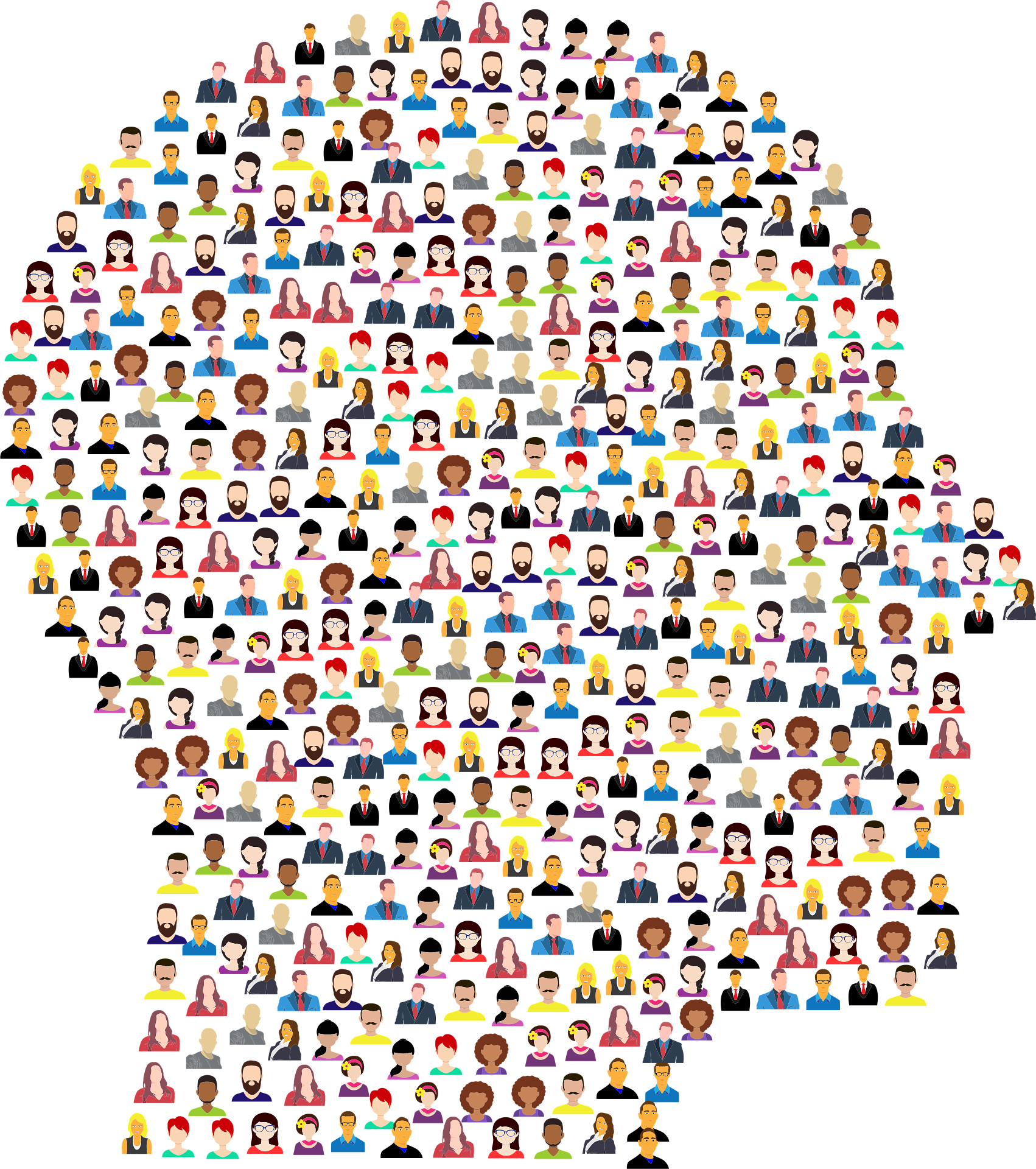
Your identity isn’t a single narrative. It’s a collection of voices, each one trying to protect you, guide you, or be heard.
Who are you?
Perhaps a more useful question is this:
Which part of you is telling your story?
For many years, the idea that a person might contain multiple personalities was associated with mental illness. But psychologists increasingly recognize that the human mind is naturally composed of many distinct personality parts, each with its own perspective, emotions, and memories.
As Walt Whitman once wrote, “I am large. I contain multitudes.” As do we all.
Each of these parts has a voice and a desire to be heard. Each carries its own story about what the world is like and what we must do to stay safe within it.
Sometimes these parts agree with one another.
Sometimes they strongly disagree.
Our identity is not a single story. It is a collection of stories, told by the many different parts of ourselves.
I like to imagine our personality as a library filled with books written by all the different parts within us.
Some of the authors are young and inexperienced, still learning how the world works. Others are wiser, shaped by years of life experience. Some parts are analytical and rational. Others are deeply emotional and intuitive.
Yet despite their differences, all of these parts share the same intention:
They are trying to help us. Their job is to protect us, guide us, and help us feel whole.
Like any library, our inner world contains a wide range of perspectives and interpretations of reality. Some of the books are well-worn classics that we return to again and again. Others are newer stories that have only recently begun to take shape. And some books are outdated but they still sit on the shelf because no one has questioned them.
Our minds crave novelty and growth, but they also value safety and stability. Because of this, some protective parts repeat the same story over and over again. Their goal is continuity. Predictability. Protection from pain. They keep telling the story they believe will keep us safe. I touched on this briefly in last week’s newsletter.
For many years, one part of me was absolutely convinced that I hated beets.
This part faithfully reminded me of this fact whenever beets appeared on a plate. Its message was clear: Avoid beets at all costs. And so I did. That story kept beets safely out of my mouth for many years. Eventually, however, a more adventurous part of me decided to try something new.
Fortunately, I had no idea that what I was eating were beets. If I had known, that protective part would have immediately intervened! But once the experiment was complete, a new story began to form.
The adventurous part explained to the younger part that perhaps the problem had never been all beets. I had only tasted canned beets. Fresh roasted beets in a salad are an entirely different experience. Over time, even my younger part reluctantly agreed.
The story changed. And once the story changed, so did my experience.
This may seem like a small example, but it reveals something important about how our inner world works. The stories we tell ourselves rarely come from a single unified narrator. They come from different parts of us, each trying to help in its own way.
Over time, the stories our parts repeat begin to shape our sense of identity. In other words, the voices inside us quietly influence the story we tell about who we are.
This is also true in our relationships with others.
Every human interaction is, in some sense, a meeting of stories.
But it’s not enough to simply listen to the story someone tells. It’s equally important to ask a deeper question:
Which part of the person is telling the story?
Is it a protective part trying to prevent pain? A hopeful part imagining possibility?
A wounded part asking to be understood? When we begin to recognize the different parts behind the stories both in ourselves and in others our conversations change. Our compassion grows. And the stories themselves begin to evolve.
One of the most powerful things we can do is occasionally step back and review the stories in our inner library to see which ones still serve us and which ones might be ready for revision.
A simple question can open that door:
Which part of me believes this story?
Much of the work I do with clients involves helping them recognize the different parts that are shaping the stories of their lives. When we learn to listen to these voices with curiosity rather than judgment, something powerful happens.
The story loosens. New possibilities emerge. And we gain the freedom to choose which voices will help write the next chapter.
Think of a story you are currently telling yourself. What part of you is telling that story and what purpose is it serving?